
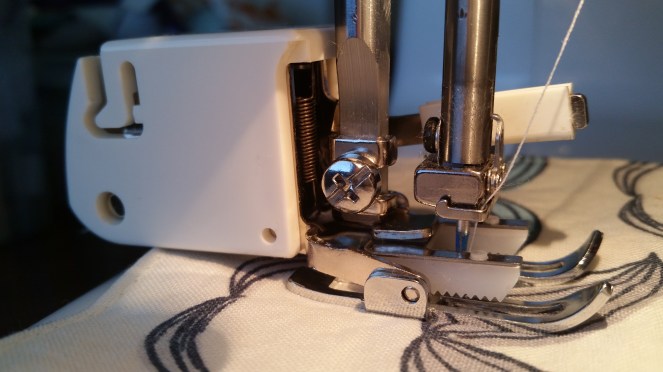
 And that’s just what it’ll do!
I love variety in my crafting. It keeps things interesting, and I have the opportunity to learn something new. So, when I decided to make a sensory sock for my little guy who is always seeking proprioceptive input (crashing into the couch, punching things, or generally seeking strong physical feedback), I decided a 4-way stretch Lycra was the appropriate fabric for such a task.
The only problem was I had never worked with knits (there are specific things to keep in mind when sewing with stretchy fabrics or whatever you’re making could turn out disastrous). So, I did what I do best, and turned to the internet for guidance in traversing such murky waters.
It turns out that there is a special presser foot designed to work for such projects that you can purchase for your sewing machine (I even found one to fit on my old discount generic-brand machine, so I’m guessing any machine that has a removable presser foot could pretty well be fitted for such a fancy contraption). It’s called the Walking Foot.
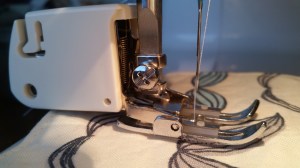
A Walking Foot is a mechanical marvel that basically gives you upper feed dogs (little grippy “teeth” that help move the fabric through the machine). The way it works is a lever sits atop your needle-adjustment screw, and as the needle lowers and raises, the lever lifts or lowers the upper feed dogs to help evenly feed your top fabric and bottom fabric at the same time. It’s like a feed dog sandwich with fabric on the inside.
The beauty of this simple tool is that unless you’re pulling too hard on a knit fabric (causing it to stretch as it goes through the feed dogs), it makes sure that your top and bottom layers stay together as they are stitched with little to no slipping. If you’ve ever worked with slippery material (like swimsuit spandex or silk), you’ll understand why this is such a great help.
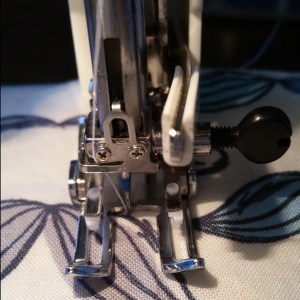
I had gotten so used to using it (for everyday projects, not just the tricky stuff), that I immediately bought one for my new machine when I upgraded earlier this year. I switched to an open-toe version, and I don’t regret that decision one bit – I can get a much more accurate stitch line with the extra visibility in the open-toe design.
Now, the only time you’ll find me sewing with anything other than my Walking Foot is when I’m doing something that requires a special foot, like sewing a zipper. The extra feed control and added visibility of my Walking Foot makes my sewing work look like a walk in the park.
Note: If you’re interested in purchasing one for your machine, I recommend going to the website for your machine’s manufacturer and looking up the compatible part number for the Walking Foot that will best fit your machine. If you can’t find the appropriate information there, contact your local sewing center or dealer for assistance. (It does make a difference, as machines have varying sizes of needle openings, and you don’t want to break a needle, get injured, or possibly damage your machine by using an ill-fitting part.)
 wwhandmade.com