
As a child of the late ’70s, I have a fondness of all things eighties. One of my favorite movies from that decade was The Goonies because of the epic treasure-hunt aspect. I spent many days in the later ’80s dreaming of adventuring while on the search for some obscure, hidden riches left by pirates. Nevermind that I grew up in the Midwestern United States, where nary a pirate ventured. In my mind, anything was possible!
Thankfully, in our tech-driven world, those of us who have refused to “grow up” have a new way to hold onto our treasure-hunting dreams: Geocaching! Using a GPS-enabled device (hint: any smartphone fits the bill), you can treasure-hunt to your heart’s desire pretty well anywhere in the world. Most caches aren’t going to make you rich, but they do promise adventure, intrigue, and an excuse to get out and explore the world (even if it’s just in your neighborhood).
I find that although many people have heard of Geocaching, there are still a lot of people who don’t really know what it is or how it works. The simplest explanation is that someone hides a cache, logs its GPS coordinates online, and then another person seeks the cache by using the GPS information and searching that general vicinity.
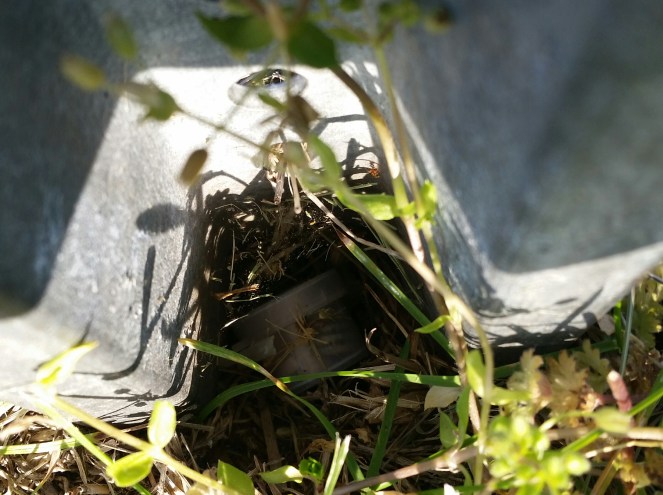
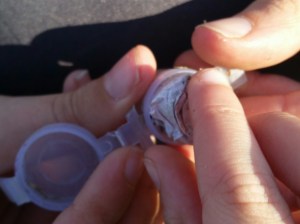 For the person hiding the cache, the fun is in coming up with a unique container, contents, and/or hiding spot. (Think of a competitive game of hide-and-seek; you get creative and excited about finding the perfect spot to hide in that everyone overlooks.) Containers can basically be anything that will keep the contents dry – I’ve seen pen caps, film canisters, small pencil boxes, coffee cans, and more. Most of the caches I’ve found have been log-only, which means the only contents are a log sheet (sometimes just a rolled up slip of paper just wide enough for initials and maybe the date); other caches may include a pencil and small notepad or have a trading component, where the hider leaves a small token item (which you are encouraged to take and replace with your own item of comparable value). The hiding spot is probably the most tricky part of Geocaching (for the hider and the seeker), especially if it’s in a fairly high-traffic area. You have to find a place that the general public (referred to as muggles) isn’t going to easily stumble upon on their own, and that causes a seeker to really search.

Once the cache is sufficiently hidden, the person hiding it goes online to share the GPS coordinates so that people can start searching for it. The only place online that I’m aware of for this is Geocaching.com. You can set up an account for free, and then enter your hidden cache, search for other people’s caches, or look for Geocaching events in your area.
If you’re searching for a cache, you would go online and enter your location to see which caches are in your area. I live in a small, Midwestern town of about 3,500 people, and there are nearly 25 in the general vicinity of my town alone; many, many more in nearby communities and in-between. My point is, you can probably find caches in your area and just about any other area you might visit, too.
When you decide to look for a particular cache, the website will give you directions to the cache site. Once on location, use the GPS coordinates of that cache to take you to the general area of where it is hidden. Then, it’s just a matter of looking high and low to find it.
If you’re like me when I first heard of it, you’re probably wondering, “If you have the GPS coordinates, what is the fun in finding a cache, since you already know where it is?” But, in practice, it’s much harder than you think. There’s generally about a 15-foot margin of error in the GPS coordinates; so, if you’re in the woods surrounded by trees, there are a ton of places that cache could be hiding – especially if it’s a small container. My boys and I have been searching for one cache on three different occasions and still haven’t found it yet; another cache took us two tries and probably 45 minutes to locate.
Once you find your first few, you get a better feel for the types of places caches might be hidden and what different types of containers might look like; even so, the thrill is just as exciting the 20th time of finding a cache as it is finding your first one.
My favorite components of this modern-day treasure hunt are the cooperation between family members to find a cache, the educational component of using GPS and problem solving (sometimes the title of the cache or description will include riddle-like clues), the fact that it gets you outside and doing something somewhat physical, and the fact that it’s practically free. It’s been a great activity/boredom buster for my family, and even makes for fun exploration of a new area in our own neighborhood or when we’re traveling.
What are you waiting for? Get out there and enjoy your own treasure hunt!
 wwhandmade.com